

Google Ads Editor Now Turns AI Max On by Default. Franchise Brands Should Switch It Off.

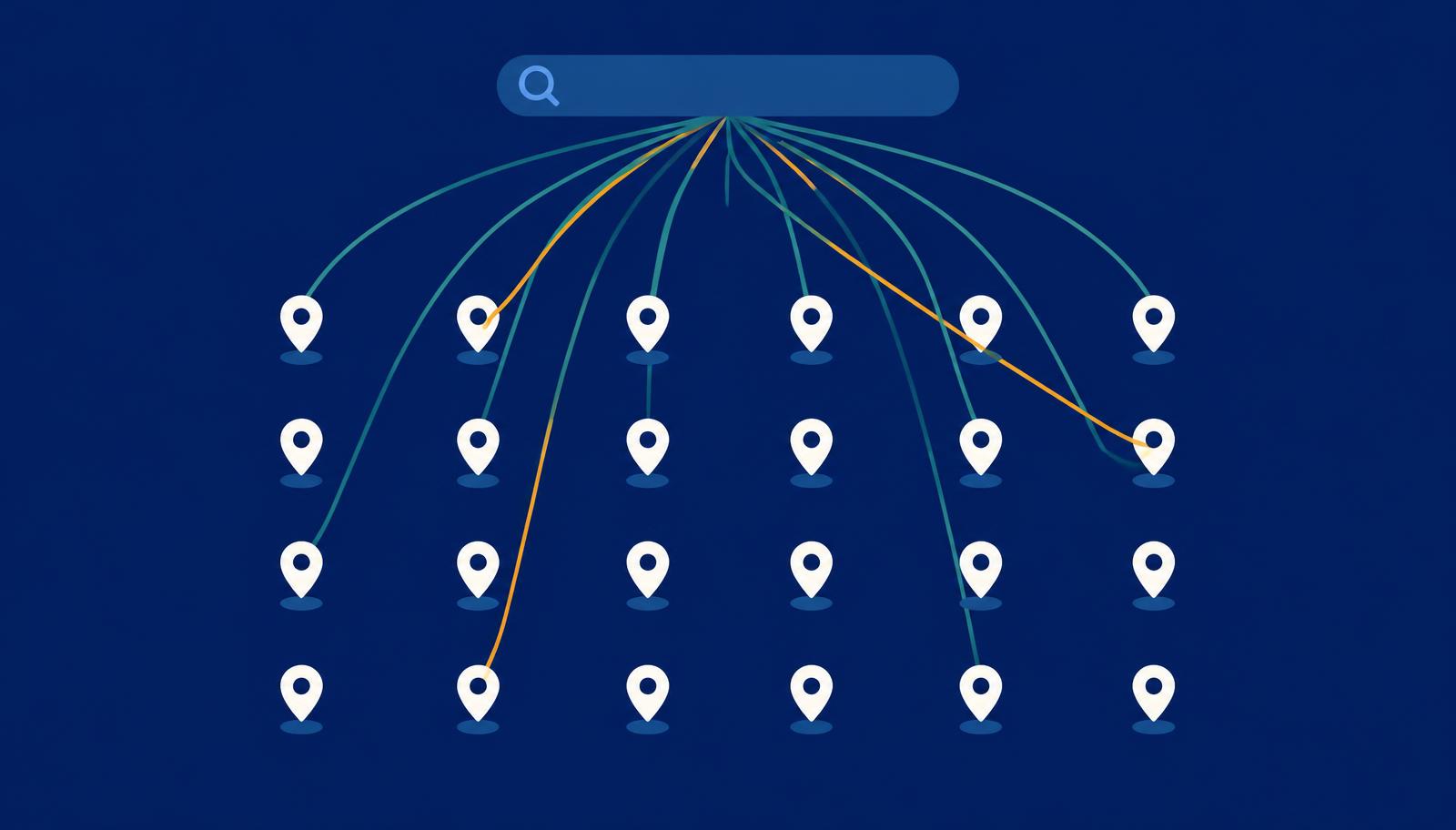
If you manage Google search for a franchise system or a chain, open Google Ads Editor this week and switch AI Max off in every new Search campaign it builds. Then turn it back on one store at a time, and only after a split test shows it finds customers your keywords miss, near the store paying for the click, and sends them to that store's own page. For a multi-location brand, the default should be off.
I'm not against automation. I build AI into marketing and product for a living, and I expect AI Max to beat a stale keyword list in plenty of accounts. My objection is narrower. A setting that picks the landing page and rewrites the ad works best for one business with one website. A franchise system is 50 or 200 small businesses sharing a domain, and each owner pays for their own clicks.
Google's newest Editor build flips the switch for you
Google's release notes for Google Ads Editor version 2.14 say AI Max, text asset automation, and Final URL expansion "are now activated by default when creating new Search campaigns." The notes don't say existing campaigns get switched over. But a team that builds 40 new location campaigns in Editor before January could ship AI Max to all 40 without anyone deciding to.
Here's what the setting does, in Google's own words. Google's AI Max documentation says search term matching uses broad match and "keywordless technology" to reach queries beyond your keyword list, and asset optimization sends people to "the landing page from your domain that is predicted to perform best" while generating ad copy to match. The same page carries two warnings that hit franchise systems harder than most advertisers. AI Max "won't be effective if campaigns are limited by budget," and single-store budgets are often small by design. Dynamic landing pages can also break into 404 errors when tracking templates aren't set up for them.
Then there's pinning. Google's Final URL expansion page says pinned responsive search ad assets aren't used when a more relevant URL is chosen. Franchise systems usually pin headlines for a reason, such as the location name or required language about independent ownership. Once expansion is on, those pins are no longer guaranteed.
Three cases where I'd leave AI Max running
The first is a brand whose site has no location pages at all, just one page per service. If every store shares the same destination, Final URL expansion can't send a guest to the wrong store.
The second is a new market where you don't yet know how people search and the campaign has room in its budget. Discovery is worth paying for when the keyword list is a guess. Google also says its locations of interest control, which matches geographic intent at the ad group level, is available only in AI Max campaigns. You give that up when you switch AI Max off.
The third is uncomfortable for a firm like ours to admit. If nobody on your team has time to maintain keyword lists for 200 stores, a guarded AI Max campaign may beat a neglected manual one. Neglect has a cost too. How we run performance marketing for multi-location brands starts from that tradeoff, store by store, rather than from a blanket rule in either direction.
The best keyword in our Knoxville account named the city
Our own numbers explain why I care more about local intent than reach. In the Horsepower Brands case study, Google Ads ran for 6 locations and produced 241 leads. Groovy Hues of Knoxville recorded 74 conversions at a 6.8% rate, and the single term "Painters in Knoxville" drove a 9.1% conversion rate. Gatsby Glass of South Raleigh recorded 186 conversions at a 7.4% rate, with "Glass Repair Near Me" among its top keywords.
The best converting query we reported for that painting franchise named the city the store serves. The searches that pay a local owner tend to carry a place in them, whether a city, a neighborhood, or "near me." So I'd judge any setting that widens matching by whether it finds more of those searches for the store paying the bill.
Peer-reviewed research gives a second reason to test instead of trusting the dashboard. In a large field experiment at eBay, published as an NBER working paper by Tom Blake, Chris Nosko, and Steven Tadelis and later in Econometrica, returns from paid search were "a fraction of conventional non-experimental estimates," and brand keyword ads showed no measurable short-term benefit. Platform-reported conversions include people who would have bought anyway, and I'd expect broader matching to make that harder to spot.
This is why I keep saying multi-location marketing needs measurement at the location level. A blended account number can show AI Max winning while three stores pay for clicks that belong to a fourth.
The landing page roll call
Here's the method I'd run this week. It needs Editor, Google Ads access, and a spreadsheet. Nothing to buy.
Step one, find what Editor built
Open Editor, filter to Search campaigns created since your team updated to version 2.14, and check the AI Max setting on each. Write down every campaign where it's on and nobody remembers choosing it.
Step two, take attendance on landing pages
For each campaign with AI Max on, open the landing pages report for the last 30 days, or as many days as it has run, and add the "Selected by" column, which Google added to show the pages AI Max picked. Sort every URL that received clicks into four groups. That store's own page, another store's page, a national or blog page, or an error page.
Step three, tag the search terms
Filter the search terms report to the AI Max match type. Tag each term with clicks as local if it names the city or a neighborhood or says near me, as generic if it doesn't, and as outside the trade area if it names somewhere the store doesn't serve. Total the spend in each group.
Step four, check whether a fair test is even possible
Google's page on AI Max experiments says the experiment flow won't run on campaigns that use shared budgets or portfolio bid strategies, and that the same limits apply to custom experiments. Plenty of franchise accounts use both to keep management simple. If yours does, move the test campaign onto its own budget and its own bid strategy before you start.
Then sort each location campaign with this table.
| What the roll call shows | What I'd do |
|---|---|
| More than 10% of AI Max clicks went to a page other than that store's own | Turn Final URL expansion off for that campaign today |
| More than a third of AI Max spend went to generic or out-of-area terms | Turn search term matching off in those ad groups |
| The campaign shows as limited by budget | Turn AI Max off until the budget can carry it |
| Clean pages, local terms, and room in the budget | Run a 50/50 experiment for four weeks and keep AI Max only if verified leads for that store rise at the same or lower cost |
I picked the 10% and one-third lines myself. Set your own before you open the reports, so the data can't talk you into them. If only one or two stray URLs show up, Google's URL exclusions can block them without switching expansion off, though exclusions only work while expansion stays on.
What one account's split test won't settle
A four-week test at one store is a small sample, and December traffic doesn't look like March traffic. Our Horsepower Brands figures are 2025 year-to-date numbers from a home services portfolio, and I can't tell you from that study whether AI Max played any part in them. The eBay experiment is more than a decade old and measured a national online retailer, so take its direction and leave its effect sizes. And Google's help pages describe what the settings do, not how they perform for franchise systems.
A verified lead also isn't revenue. Tying a search change to sales at a specific store takes POS data, which is the job of closed-loop attribution for clients who opt in. Without that link, the roll call shows you where clicks go and what they cost. It can't put a dollar value on a store's share of them.
Check one campaign before lunch
Pick the location campaign your team built most recently. Open its settings, find the AI Max section, and see whether the toggle is on. If it is and nobody chose it, export that campaign's landing pages report before you change anything. That export is the first row of your roll call.
Sources
- Google, "Google Ads Editor version 2.14," Google Ads Editor Help, accessed November 17, 2026.
- Google, "How AI Max for Search campaigns works," Google Ads Help, accessed November 17, 2026.
- Google, "About Final URL expansion in Search," Google Ads Help, accessed November 17, 2026.
- Google, "About AI Max experiments," Google Ads Help, accessed November 17, 2026.
- Tom Blake, Chris Nosko, and Steven Tadelis, "Consumer Heterogeneity and Paid Search Effectiveness: A Large Scale Field Experiment," NBER Working Paper 20171, May 2014, published in Econometrica, 2015.
Brantley Smith
Chief Marketing & Product Officer, Triadex
Brantley Smith is Chief Marketing and Product Officer at Triadex, where he leads the marketing organization and the product platform, aligning client marketing performance with the systems that help multi-location brands grow at scale. He founded and scaled HomePro Marketing, building performance-driven marketing systems for franchise and multi-location brands before its acquisition by Triadex. His background spans agency leadership, SaaS product development, and B2B and B2C digital marketing strategy.
LinkedIn

Need help with your marketing?
Let's build a data-led marketing strategy tailored to your multi-location brand.
Talk to a Specialist