

Stop Grading Direct Mail on Redemptions. Count the Guests You Can Reach Again.

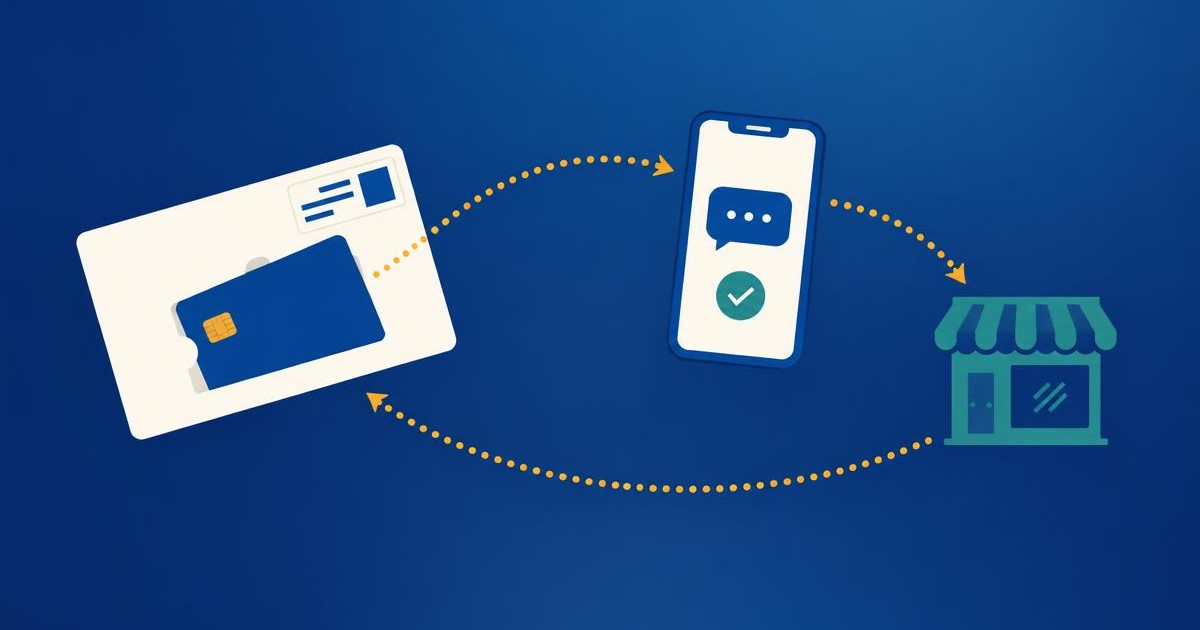
Every mailer should leave you a way back to the guest
Most multi-location brands grade a mail drop on its redemption rate. I think that's the wrong scorecard. Starting with your next drop, I'd judge every piece by how many of the people who redeem it you can reach again, with their consent, by text, email, or a loyalty account. I'd even accept a slightly lower redemption rate to get that number up, because a guest you can reach again costs you almost nothing the second time.
I've spent my career in sales strategy, loyalty marketing, and CRM, and the pattern I see most often is a brand paying to acquire the same household over and over. The card works, the guest comes in, and the relationship ends at the register. Next quarter the brand buys that household again with another stamp. Direct mail is a data channel, not a legacy channel, and a piece that collects nothing wastes half of what it could do.
The economics have been known for years. Harvard Business Review has put the cost of winning a new customer at anywhere from 5 to 25 times the cost of keeping an existing one, depending on the study and the industry. Mail reaches households you've never met by name and address. The question is whether you let them walk out without a way back.
Two campaigns where the second send mattered more
A restaurant with several U.S. and international locations mailed 3,682 of our card mailers, each carrying two $10 gift cards with a $30 minimum purchase. Each card had a unique key code, and guests had to text it to activate the card, which also opted them in to future offers. The campaign introduced the restaurant to 183 new customers it could market to whenever it wanted. The restaurant then texted those 183 people an offer for 50% off an entree, good only that Friday. Of those, 42 responded, a 23% redemption rate, and that second send needed no printing and no postage.
A movie theatre chain with over 20 locations went further and made the sign-up the offer. The card gave a free small popcorn for joining its VIP Club, where guests earn points on every visit. We tested a saturation list against a targeted list that added a movie-goer propensity model. The targeted list finished at 9% against 3% for saturation, and each of those redemptions came with a VIP Club sign-up the theatre could use again without another mailer.
Both reports still headline a redemption rate. Neither headlines how many guests the brand kept a line to, and that's the number I'd put first.
USPS and the FCC both moved this fall
The first change is postage. USPS has published its 2027 promotions calendar, and the Integrated Technology promotion offers a 5% postage discount on mail that builds in technologies such as NFC, video in print, augmented reality, mobile shopping, or AI. Registration opens November 15, 2026 and runs through December 31, 2027, and mailers choose their own six-month window starting January 1. The Postal Service is paying mailers to connect paper to a phone. Check the guidebook before you design around the discount, because it decides which executions qualify.
The second is texting. A Federal Communications Commission order published in the Federal Register takes effect November 25, 2026. It lets a sender designate an exclusive way for consumers to revoke consent, such as replying with a standard word like "stop," as long as the method is clearly disclosed. It also states that a revocation in response to a marketing text revokes consent to all future marketing texts from that sender, and that revocations must be honored within 10 business days. If your mailer asks guests to text a code, your opt-out setup has to be right before the first piece drops. I'm not a lawyer, so have counsel review it, especially if franchisees send their own texts.
Then there's trust. Pew Research Center found that 67% of U.S. adults say they understand little to nothing about what companies do with their personal data, and 73% feel they have little or no control over the data companies collect. Guests will share a phone number for something they value, but the ask has to be plain. One clear trade printed on the card, such as "text this code to activate your $10," beats a block of fine print.
The second-send tally
You can run this in a week with exports you already have, and you don't need to buy anything.
- Pick your last two mail drops and list, by location, the pieces mailed and the redemptions recorded.
- Match each redemption to your POS, loyalty, and email or SMS records. Mark a guest reachable only if you hold a phone number with text consent, an email address with consent, or an active loyalty account.
- For each location, divide reachable guests by total redemptions. That's your capture rate. Also divide reachable guests by pieces mailed and multiply by 1,000, so you can compare stores that mailed different volumes.
- Note what each piece asked the guest to do. Did redeeming require a sign-up, a text code, or nothing at all?
- Sort locations by capture rate and apply the rule in the table below.
| Capture rate | What it usually means | What I'd change on the next drop |
|---|---|---|
| Under 25% | You're renting customers one visit at a time | Add one activation step, like texting a code or joining the loyalty program to redeem, and test it at half your locations |
| 25% to 60% | The piece asks, but stores lose the data at the counter | Compare stores with similar volume, find the ones that skip the sign-up, and fix training before you touch the creative |
| Over 60% | You own most of the guests your mail brings in | Shift part of next quarter's acquisition budget to follow-up offers for these guests, and mail farther out to reach new households |
The thresholds are my judgment and don't come from an industry benchmark. Set your own before you look at the results. Report the number by location, because a blended capture rate will hide the stores where nobody at the counter asks.
Once you can reach a guest again, move the follow-up into your email and SMS program and save postage for households you don't know yet.
Old campaigns, small samples, and other caveats
Our two examples are older campaigns, published in 2018, and each is a single program for a single brand. The restaurant's second send was one Friday offer to 183 people, so I wouldn't project its 23% onto a full system. Neither study tracked how many captured guests later opted out or how much they spent over a year, and that lifetime number is the one that would settle this argument.
I also can't tell you how much redemption you give up by adding a step. A text-to-activate requirement may cost you some guests who would have redeemed a plain coupon, and we haven't published a controlled test of that trade. The Pew figures date to 2023, and USPS and FCC terms can change, so confirm them before you plan. Where clients opt in, our closed-loop attribution connects mail to sales by location, which is how you'd measure the long-term value of a captured guest. Without it, treat the tally as a direction to test.
Four cases where I'd skip the sign-up step
Sometimes redemption should stay the scorecard. A grand opening needs people in the room this week, and an extra step before a guest can use the card works against that. A mailing to guests already in your CRM doesn't need to capture anything, because you already have them, and that's the job of retention marketing. In some categories, healthcare among them, asking for a phone number on a promotional piece can feel intrusive and raises its own privacy questions. And in a franchise system where corporate and franchisees haven't agreed on who owns the guest list, I'd settle that first. Franchisee adoption is partly a trust problem, and an opt-in program that one side sees as a data grab will fail at the counter no matter how good the card is.
Pull one export before your next drop goes to print
This week, ask whoever runs your POS or loyalty data for one number from your busiest location. Of the guests who redeemed your last mailer there, how many can you reach again today with consent? If the answer is "we don't know," that's the first thing to fix.
Sources
- Harvard Business Review, Amy Gallo, "The Value of Keeping the Right Customers," October 29, 2014.
- U.S. Postal Service, "Direct Mail Promotions & Incentives," 2027 Integrated Technology Promotion, accessed November 3, 2026.
- Federal Communications Commission, "Enhancing the Ability of Consumers To Control the Robocalls," Federal Register, October 26, 2026.
- Pew Research Center, "How Americans View Data Privacy," October 18, 2023.
Amanda Mangler
Senior Vice President, Revenue, Triadex
Amanda Mangler is Senior Vice President, Revenue at Triadex, where she leads enterprise revenue strategy and oversees national sales and account operations, working closely with clients and internal teams to ensure measurable growth and sustained campaign performance. She brings over 15 years of experience in sales strategy, loyalty marketing, and cross-channel engagement. Her career spans senior leadership roles at Epsilon, Sears Holdings, and Cancer Treatment Centers of America, where she led data-driven CRM programs and multimillion-dollar campaigns for brands including ExxonMobil, Marriott, McDonald's, and Altria. She holds an MBA from Plymouth State University and a BA in Communications and Management from Ottawa University.
LinkedIn
Need help with your marketing?
Let's build a data-led marketing strategy tailored to your multi-location brand.
Talk to a Specialist